
In 1443, the most powerful civil servant in Burgundy made a deal for his soul. Nicolas Rolin, chancellor to Duke Philip the Good, had grown rich in a poor century — plague, hunger, the wreckage of the Hundred Years’ War — and with his wife Guigone de Salins he founded a hospital for those who had nothing: the Hôtel-Dieu de Beaune, a palace for the poor. It admitted its first patient on 1 January 1452 — and did not stop being a hospital until 1971.
A palace for the poor
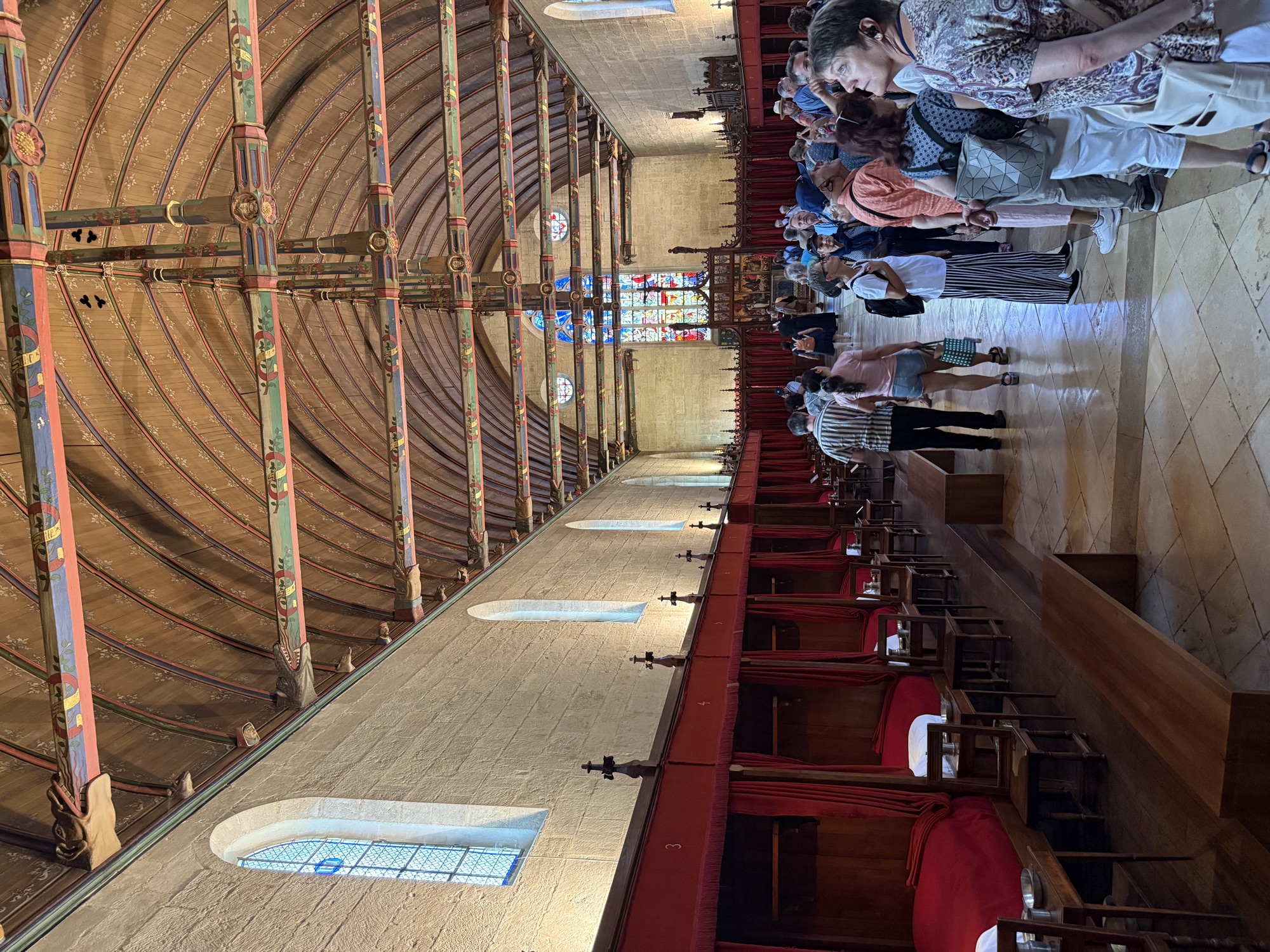
The Grande Salle des Pôvres is the heart of it: fifty metres long, sixteen high, a painted timber vault like an upturned ship’s hull, and two rows of red-curtained beds — each of which once held two patients, lying head to toe. That was the luxury of Beaune: in the Hôtels-Dieu of Paris or Lyon, up to six patients shared a single bed. The sick lay with their eyes toward the chapel at the end of the hall: care for the body and the soul in one room.
The roofs
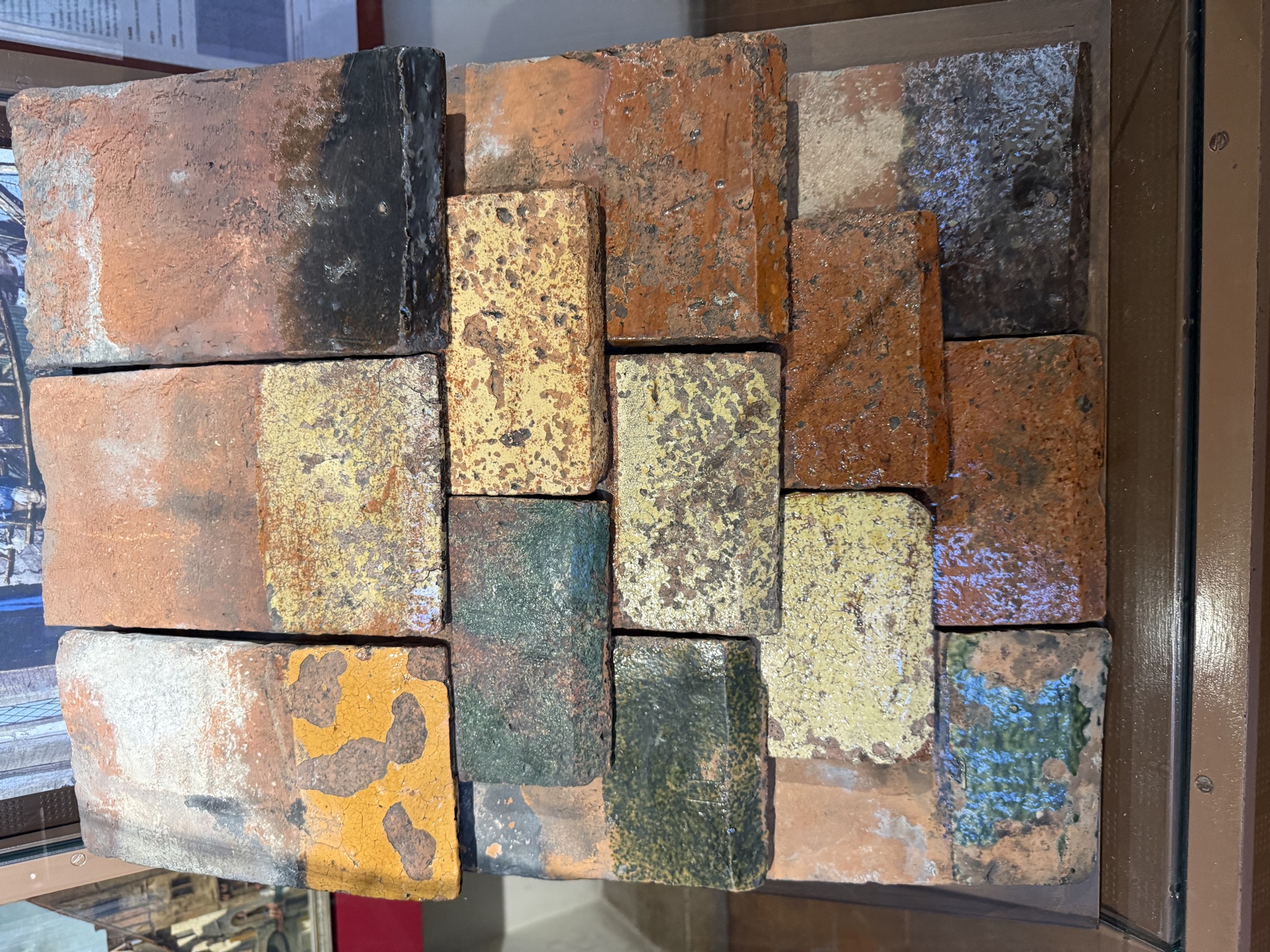
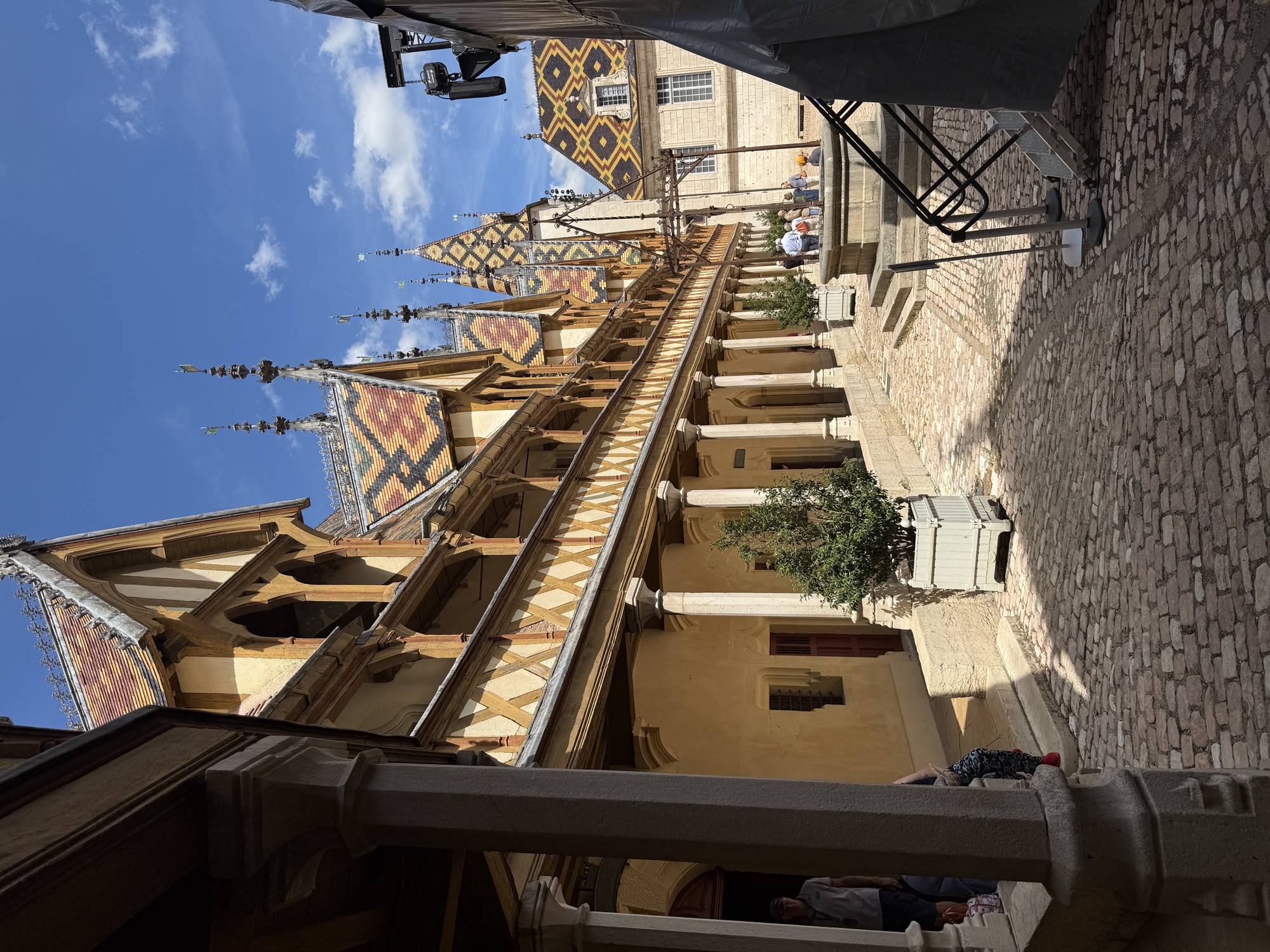
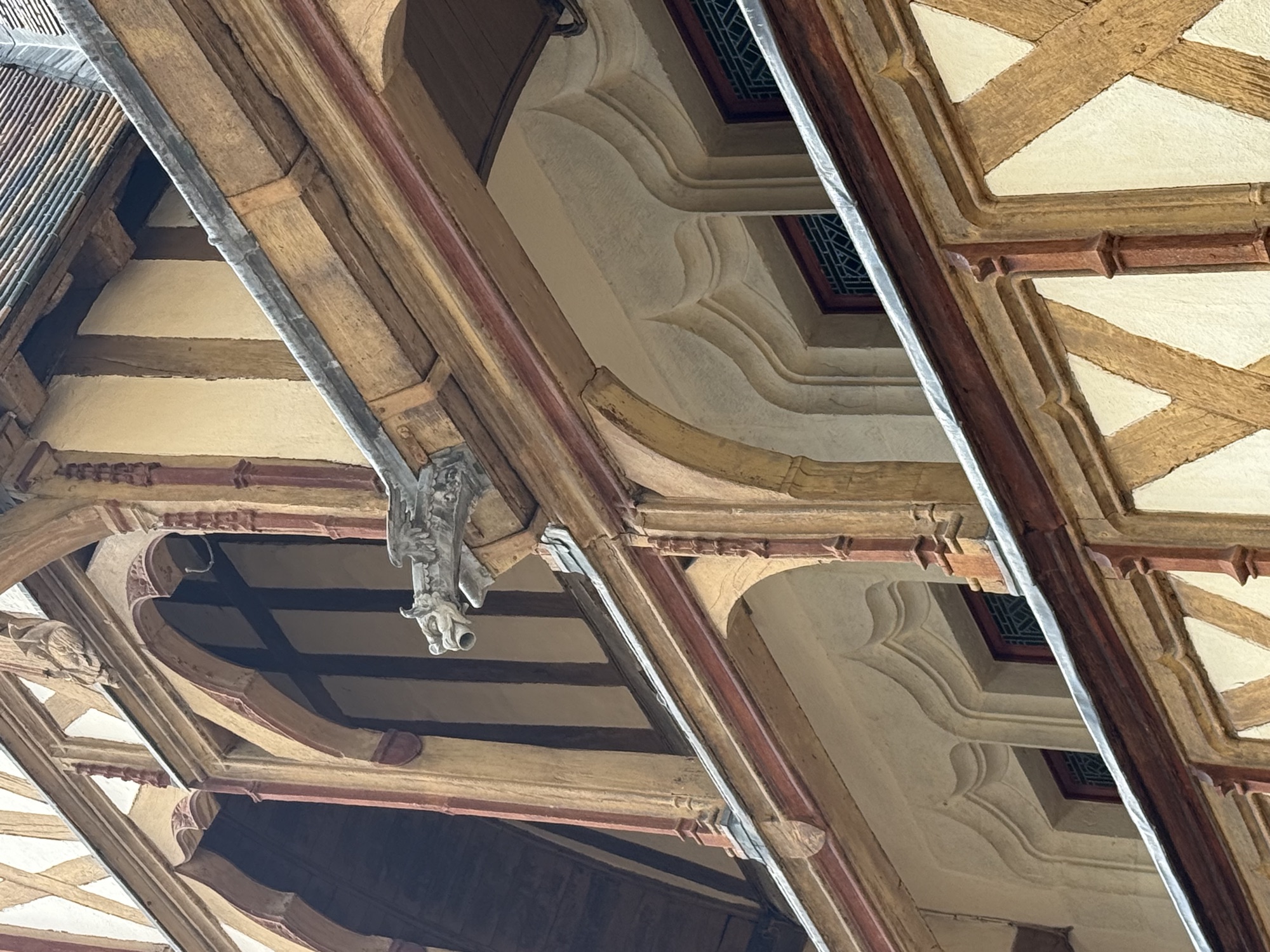
From the courtyard you see what made the building famous: polychrome glazed tiles in red, brown, yellow and green, laid in interlaced patterns across steep Burgundian roofs. Today’s tiles are faithful replicas from the restoration of 1902–1907 — the pattern, however, is the original promise: this is a palace, and it belongs to the poor.
Kitchen, pharmacy, scalpel, X-ray
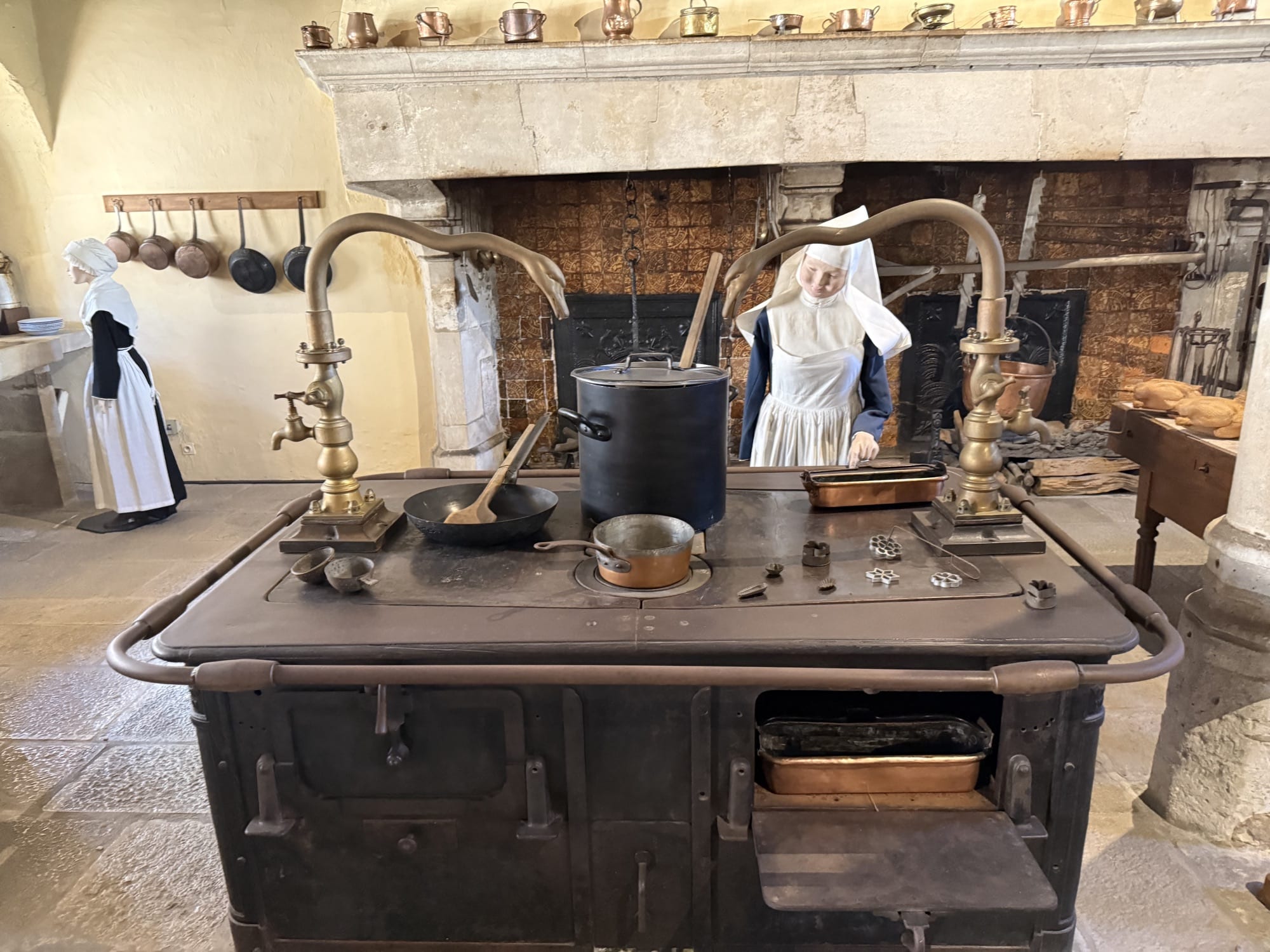
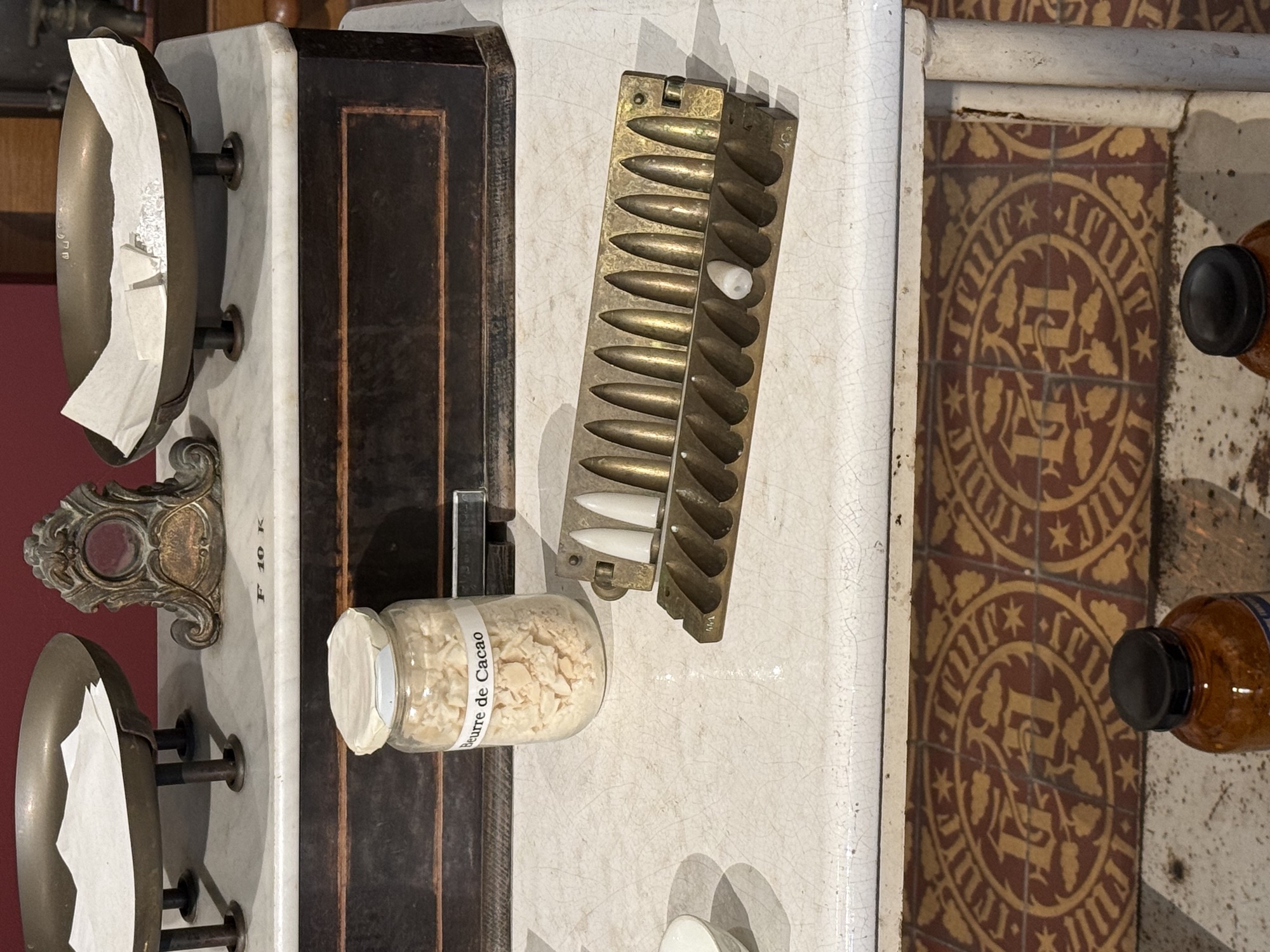
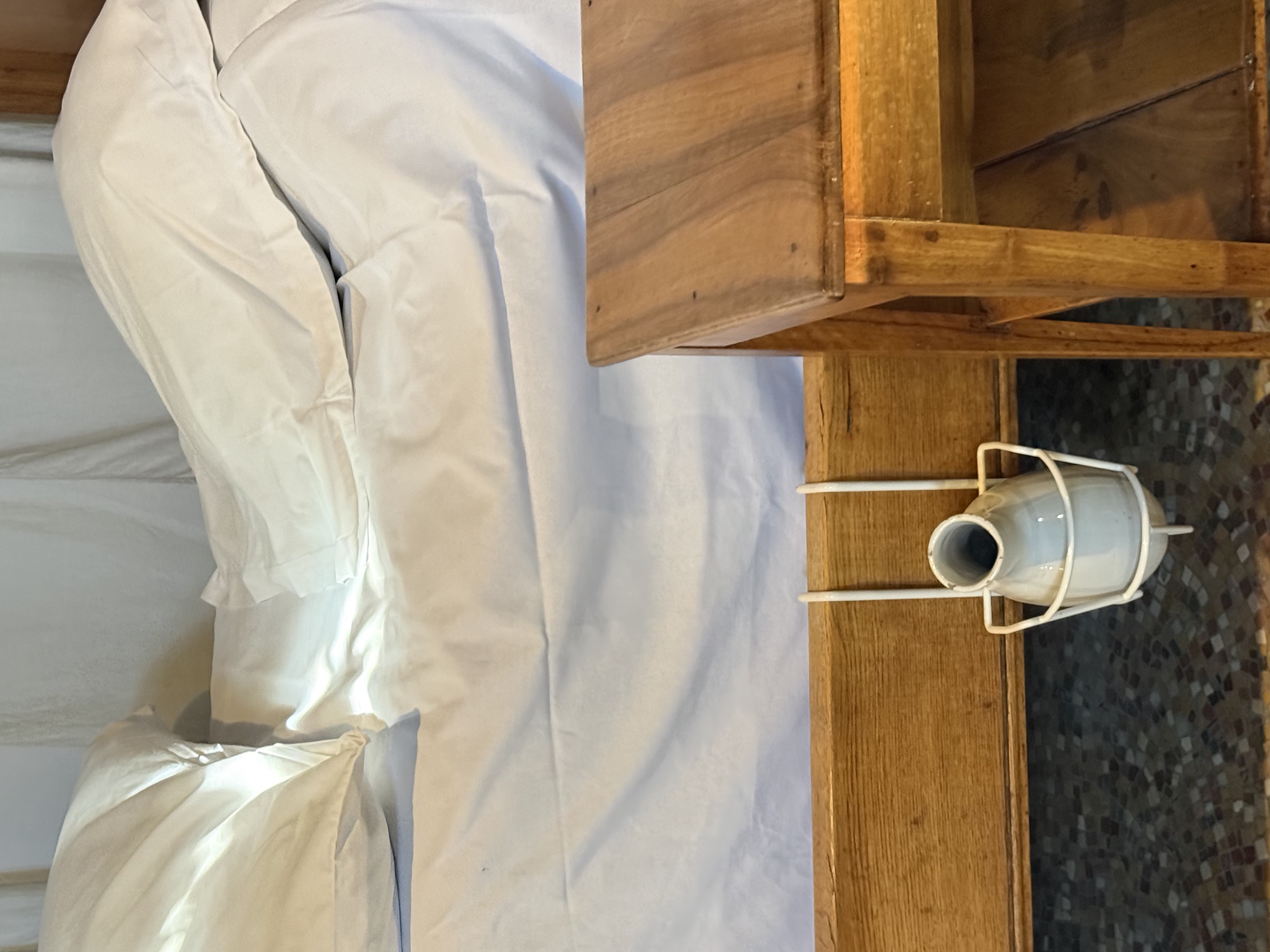
Behind the hall the working hospital unfolds: the great black stove of the kitchen, the apothecary with its faience jars and pill-making tools — and then, room by room, five centuries of medicine: surgical instrument sets, an early 20th-century wheelchair, the first X-ray images. The startling thing about Beaune is not that it is old, but that it stayed in service so long: patients were nursed under the painted vault into the 1970s.
The Last Judgment
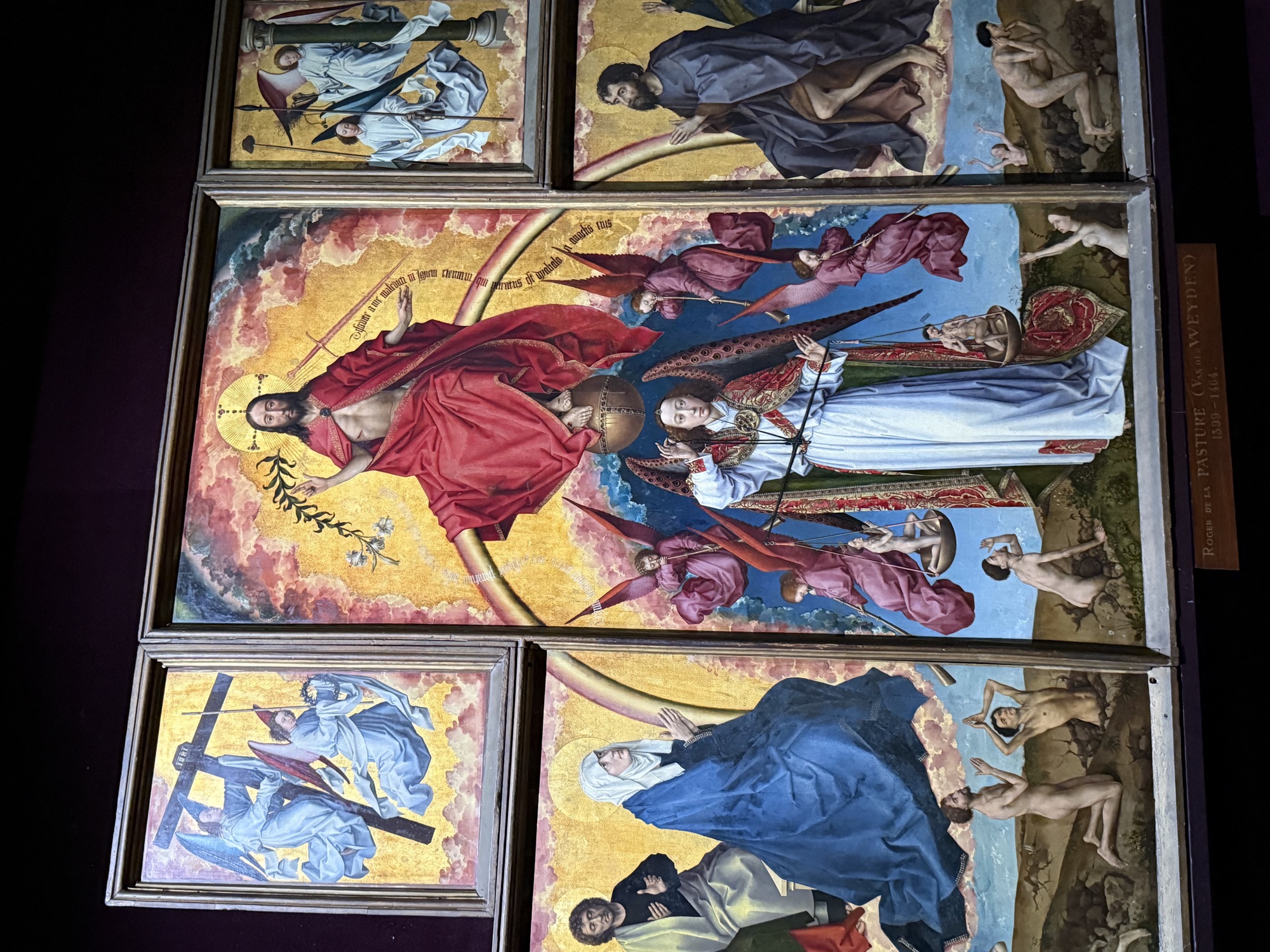
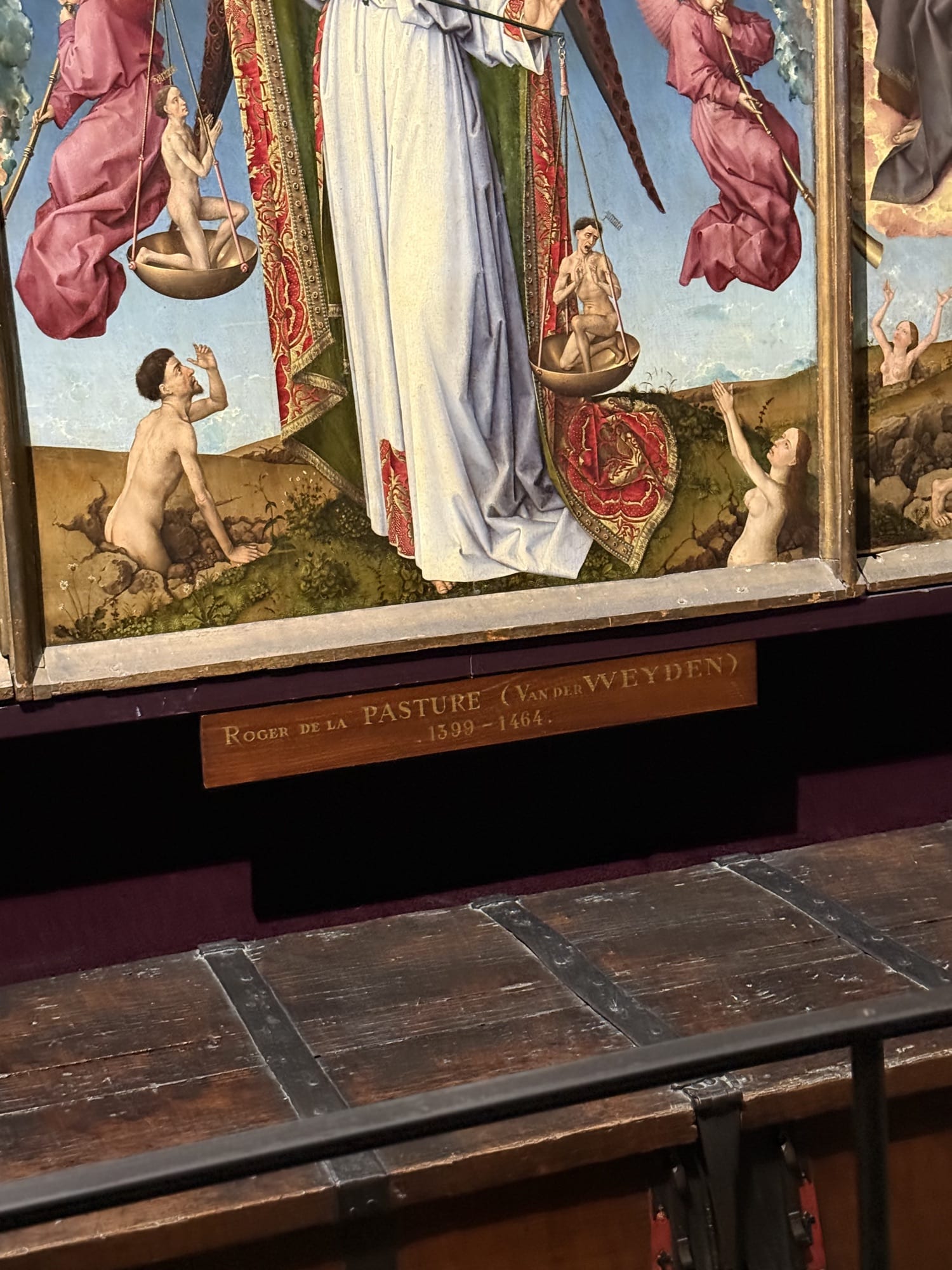
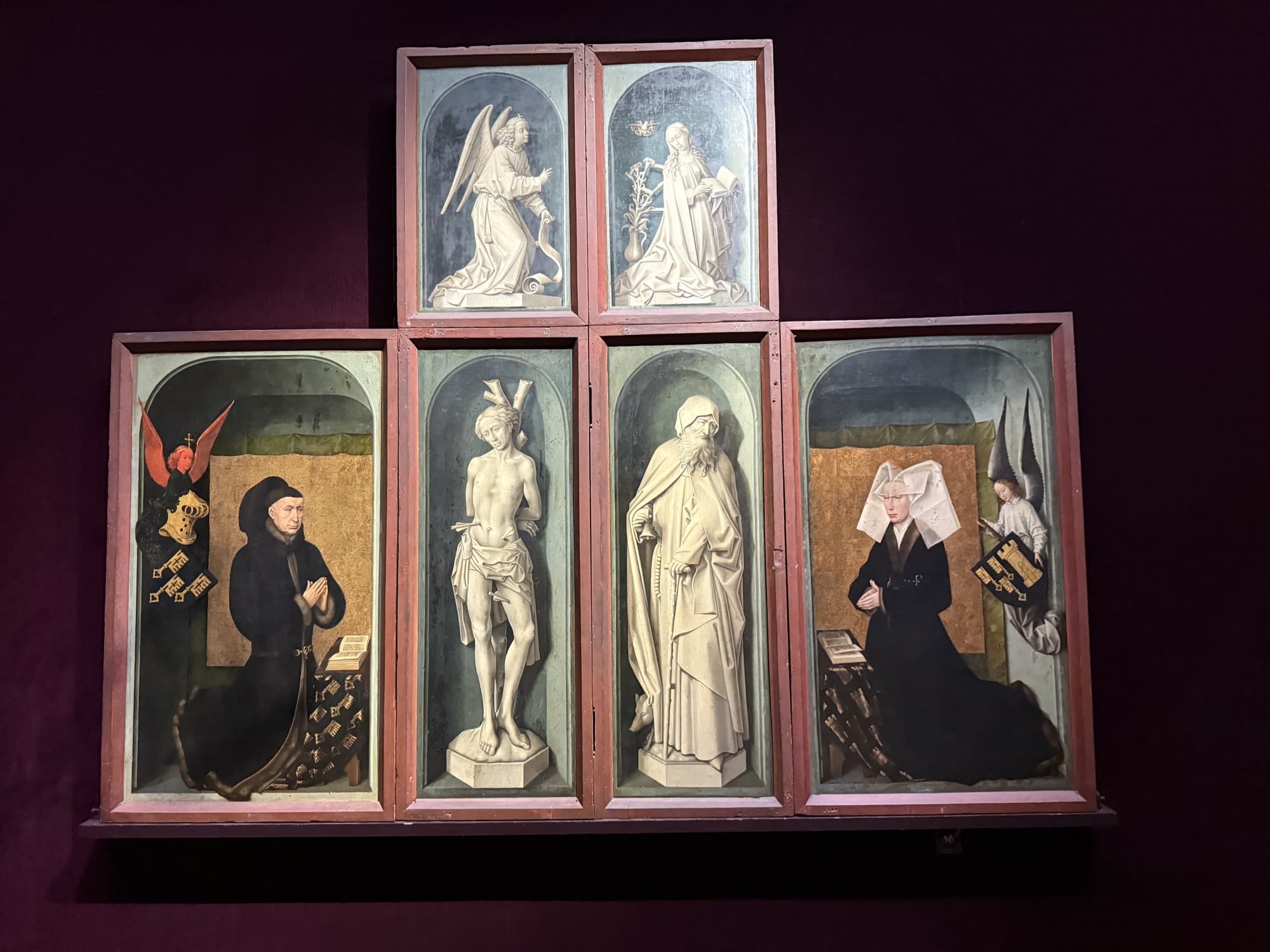
And then you stand in front of the reason Rolin built it all. Rogier van der Weyden’s Last Judgment polyptych, painted around 1443–1451 for the chapel, shows the Archangel Michael weighing souls while humanity climbs naked from its graves. On the closed wings kneel the donors themselves — Rolin and Guigone, in prayer, forever. The deal, made visible: a hospital on earth against the scales of heaven.
Visiting the Hôtel-Dieu
- Where: in the centre of Beaune, Côte-d’Or — the wine capital of Burgundy.
- What it is: a museum since the hospital moved out; allow 1.5–2 hours with the audio guide.
- The wine: the Hospices still own about 60 hectares of vineyards; their charity wine auction, held every third Sunday of November since 1859, funds the institution to this day.
- Look for: the motto “Seulle” — Rolin’s “only star”, his wife — hidden in floor tiles and beams throughout the building.
Sources
- Information panels on site, Beaune / Hôtel-Dieu museum labels (photographed July 2026).
- Wikipedia: Hospices de Beaune — dates and details cross-checked.
- Hospices Civils de Beaune.
- Châteaux & Histoire: Hospices de Beaune and Escapades en France: La Grande Salle des Pôvres — two patients per bed, head to toe; comparison with Paris and Lyon.